Diffs
Lix diffs rows, not lines.
Plugins parse a file into rows: a CSV record, a spreadsheet cell, a Markdown
block. Lix stores every change as a row in lix_change. A diff is therefore a
set of changed rows. It names the row that changed and gives its new value.
That is the whole idea.
Example
An agent edits /orders.csv and sets order 1002 to shipped.
Before:
| order_id | product  | status  |
| -------- | -------- | ------- |
| 1001     | Widget A | shipped |
| 1002     | Widget B | pending |
After:
| order_id | product  | status  |
| -------- | -------- | ------- |
| 1001     | Widget A | shipped |
| 1002     | Widget B | shipped |
A text diff sees a line:
-1002,Widget B,pending
+1002,Widget B,shipped
Lix sees a row:
| row_ref | schema_key | snapshot_content |
|---|---|---|
lix_row_ref:v1:… | csv_row | {"id": "0192f3a1-…-7b2c", "order_key": "…", "cells": ["1002", "Widget B", "shipped"]} |
The CSV plugin gives each record a stable id, so the row keeps its identity
even when the file is reordered. cells holds the decoded record. One cell
changed, and your app renders that:
order_id 1002 status:

- pending
+ shipped
Granularity comes from plugins
A plugin decides what a row is for its format. The Markdown plugin emits blocks, the CSV plugin emits records. Both ship with the JavaScript SDK. Other formats need a plugin you install yourself. Without one, Lix still tracks the file but does not split it into rows, so its diff is the whole file.
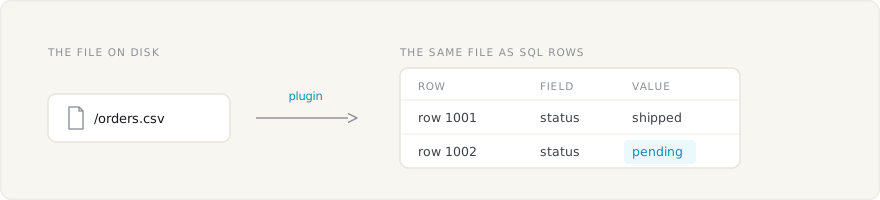
Application data that never touches a file works the same way. Register a schema and its rows diff like any other row.
What this buys you
- Review the record, field, or paragraph that changed, not a patch hunk.
- Query diffs by schema, file, row, branch, or time.
- Revert one field without reverting the file.
- Merge concurrent edits to different rows of the same file without a conflict.
Query it
Which rows of /orders.csv changed, most recent first?
SELECT
  f.path,
  c.created_at,
  c.snapshot_content
FROM lix_change AS c
JOIN lix_file AS f
  ON f.id = c.file_id
WHERE c.schema_key = 'csv_row'
  AND f.path = '/orders.csv'
ORDER BY c.created_at DESC;
Learn more
- Diff Commands: compare two commits.
- History and SQL Surfaces: branch-scoped state and history queries.
- Schemas: define rows for application data.